 breast.oncosurgery@gmail.com
 +91 9871413426
 Home
Home Testimonials
 Blogs
Blogs Contact



AI in Breast Cancer Screening: Can Artificial Intelligence Detect Breast Cancer Earlier?
- Blog
- AI in Breast Cancer Screening
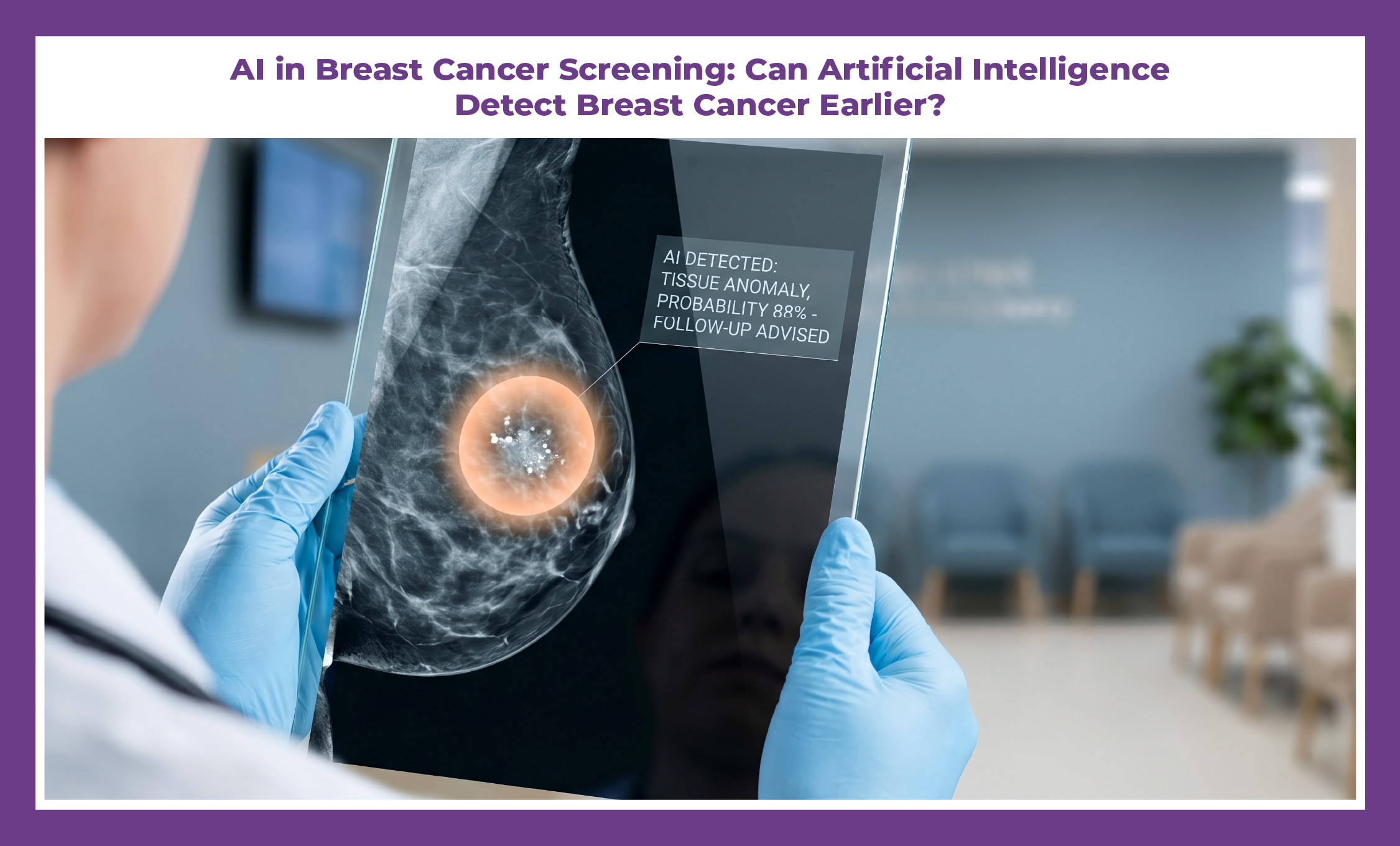
Breast cancer is one of the most common cancers affecting women, and detecting it at an early stage can make a significant difference in treatment options and outcomes. Mammography has long been an important tool for breast cancer screening, helping doctors identify suspicious changes before they become noticeable through symptoms. Today, another technology is increasingly becoming part of the conversation around breast cancer screening: Artificial Intelligence (AI).
But can artificial intelligence actually detect breast cancer earlier? Can AI identify a tumour that a radiologist might miss? Does AI make mammography more accurate, and should women be relying on AI for breast cancer screening?
The short answer is that AI can assist doctors in identifying suspicious breast abnormalities and may help improve the detection of some breast cancers, but it does not replace a radiologist, breast specialist, biopsy, or clinical examination. AI works as an additional tool that analyses medical images and highlights areas that may require closer attention.
For women concerned about their breast health, understanding how AI-assisted screening works can help them make informed decisions about when and where to seek professional evaluation. If you have an abnormal mammogram, a breast lump, nipple changes, or other concerns, consulting an experienced breast specialist is important even when an AI-assisted screening system is involved.
For patients looking for an experienced Breast Cancer Surgeon in Haryana, Breast Cancer Doctor in Delhi, or Breast Cancer Doctor in Gurgaon/Gurugram, Dr. Deepak Jha provides specialist evaluation and personalized treatment planning for patients with suspected or diagnosed breast cancer.
Does Breastfeeding Really Reduce the Risk of Breast Cancer?
Scientific research from around the world consistently supports the idea that breastfeeding lowers the risk of breast cancer. According to studies published by leading cancer organizations, women who breastfeed have a lower lifetime risk of developing breast cancer compared to women who never breastfeed. The protective effect appears to increase with the total duration of breastfeeding across all pregnancies.
What Is AI in Breast Cancer Screening?
Artificial intelligence refers to computer systems that are trained to recognize patterns in large amounts of medical data. In breast cancer screening, AI is primarily being developed and used to analyse medical images such as mammograms.
A mammogram contains thousands of visual patterns that may be difficult to distinguish, particularly when breast tissue is dense or when an abnormality is extremely small. AI algorithms can be trained using large collections of mammography images, including images from women with and without breast cancer.
When an AI system analyses a mammogram, it can identify patterns that may be associated with cancer and flag suspicious areas for further review by a radiologist.
This does not mean that AI independently diagnoses breast cancer. Instead, it can function as a decision-support tool. The radiologist considers the AI findings alongside the mammogram, the patient's age, medical history, symptoms, previous imaging and other clinical information.
This combination of technology and medical expertise may help improve the screening process.
Why Is Early Breast Cancer Detection So Important?
Breast cancer does not always cause noticeable symptoms in its early stages. A woman can feel completely healthy and still have an abnormality that is detectable on a screening mammogram..
This is why screening is important. The purpose of screening is to look for potential abnormalities before symptoms develop or while the cancer is still relatively small.
Early detection can provide more treatment options. Depending on the type and stage of breast cancer, treatment may include breast-conserving surgery, mastectomy, chemotherapy, radiation therapy, hormone therapy, targeted therapy, immunotherapy or a combination of treatments.
However, early detection does not mean that every abnormality found on screening is cancer. Many breast findings are benign. This is why suspicious findings need appropriate evaluation rather than immediate assumptions about cancer.
How Can AI Help Detect Breast Cancer?
AI can assist breast cancer screening in several ways.
- Identifying Suspicious Areas on Mammograms
One of the most important applications of AI is image analysis. AI algorithms can examine mammograms and look for patterns such as masses, distortions, asymmetries and suspicious calcifications.
Some abnormalities can be very subtle. AI may highlight a region that deserves additional attention from the radiologist.
The goal is not for the machine to replace the doctor. Instead, it can provide an additional layer of image analysis. - Helping Radiologists Review Mammograms
Radiologists may interpret a large number of mammograms every day. AI can potentially support this workflow by drawing attention to images or areas that may require closer examination.
This can be particularly useful when abnormalities are small or difficult to distinguish from surrounding breast tissue.
The final interpretation, however, remains a medical decision. A trained radiologist evaluates the images and determines whether additional imaging or testing is appropriate. - Supporting Detection of Subtle Abnormalities
Breast cancers can sometimes present as subtle changes rather than an obvious lump. AI systems can be trained to recognise complex imaging patterns that may not be immediately apparent.
Research into AI-assisted mammography is exploring whether these systems can help identify cancers earlier and reduce the likelihood of missed findings.
However, AI performance can vary depending on the technology, dataset, imaging equipment and clinical setting. It should therefore be considered an aid rather than an independent diagnostic system.
Can AI Detect Breast Cancer Earlier Than Traditional Screening?
This is one of the most important questions women ask.
AI has the potential to improve breast cancer screening by helping radiologists detect suspicious findings more consistently. Some studies have shown that AI-assisted mammography can improve aspects of cancer detection or reduce the workload involved in reviewing screening images.
However, saying that AI can always detect breast cancer earlier than a doctor would be misleading.
AI is not a replacement for conventional breast cancer screening. Instead, it is being evaluated and implemented as an additional tool that can support clinicians.
Whether AI improves early detection depends on several factors, including the quality of the mammogram, the AI system being used, the experience of the radiologist and the characteristics of the patient's breast tissue.
Therefore, women should not postpone mammography or clinical evaluation while waiting for an AI-based screening option.
Can AI Detect Breast Cancer That a Radiologist Misses?
AI may identify suspicious areas that deserve a second look, and this is one of the reasons it has attracted considerable interest in breast imaging.
A mammogram can contain extremely subtle findings. Human interpretation can also be affected by fatigue, workload and the complexity of breast tissue. AI may provide an additional assessment of the image.
However, AI can also produce false positives. This means it may flag an area that ultimately turns out to be benign.
This is important because an AI-generated alert does not mean that a woman has breast cancer.
If an abnormality is identified, the doctor may recommend additional mammographic views, breast ultrasound, MRI or a biopsy depending on the specific finding and clinical situation.
What Happens If AI Finds Something Suspicious?
If an AI-assisted mammogram identifies an area that appears suspicious, the next step is not automatically surgery or cancer treatment.
A doctor first evaluates the finding.
Additional imaging may be recommended to understand the abnormality more clearly. Depending on the situation, this can include diagnostic mammography, ultrasound or breast MRI.
If the imaging remains suspicious, a biopsy may be recommended. During a biopsy, a small sample of tissue is removed and examined by a pathologist.
A biopsy is generally what confirms whether a suspicious breast lesion is cancerous.
This distinction is extremely important:
- AI can identify a suspicious pattern.
- Imaging can further evaluate the abnormality.
- A biopsy can confirm cancer.
- A breast cancer specialist can then develop an appropriate treatment plan.
What about Women with Dense Breasts?
Breast density is another area where advanced imaging technologies and AI are receiving attention.
Dense breasts contain more fibroglandular tissue relative to fatty tissue. On a mammogram, dense tissue can sometimes make abnormalities more difficult to see because both normal dense tissue and certain cancers can appear white.
AI may potentially assist radiologists when interpreting complex mammograms, but it does not eliminate the challenges associated with dense breast tissue.
Women with dense breasts may require a personalised screening strategy based on their age, risk factors, family history, previous imaging and other considerations.
Your doctor may recommend additional imaging when appropriate.
Can AI Replace Mammograms?
No
AI does not replace mammography. In fact, most current applications of AI in breast cancer screening are designed to work with medical imaging, particularly mammography.
Think of AI as an additional pair of analytical eyes rather than an independent doctor.
A mammogram provides the medical image. AI analyses patterns within that image. A radiologist interprets the findings. A breast specialist evaluates the patient in the broader clinical context.
This combination can potentially make breast cancer screening more efficient and effective.
Can AI Diagnose Breast Cancer Without a Biopsy?
AI cannot replace tissue diagnosis when a biopsy is medically indicated.
Even if an AI system identifies an image as highly suspicious, it does not establish a definitive diagnosis of cancer.
Breast lesions can have overlapping imaging characteristics. Some benign conditions can appear suspicious, while certain cancers may have less obvious appearances.
A biopsy allows a pathologist to examine the tissue and determine whether malignant cells are present. If cancer is diagnosed, additional testing may also be performed to understand the tumour's biological characteristics.
These results help the breast cancer team decide which treatments are most appropriate.
Is AI-Assisted Breast Cancer Screening Better?
The answer is more nuanced than simply saying yes or no.
AI has the potential to improve breast cancer screening by supporting radiologists, identifying subtle imaging patterns and potentially reducing some types of missed findings. It may also help streamline workflows in high-volume screening environments.
However, AI is only as reliable as the technology, training data and clinical implementation behind it.
There can also be false-positive results, technical limitations and differences between AI systems.
For patients, the most important point is that AI should complement medical expertise rather than replace it.
A woman's screening plan should be based on her individual risk rather than on technology alone.
Who Should Consider Breast Cancer Screening?
Breast cancer screening recommendations depend on factors such as age, family history, genetic risk, previous breast conditions and personal medical history.
Women at average risk generally follow age-appropriate screening recommendations, while those at higher risk may require earlier or more intensive surveillance.
Women should also be aware of changes in their breasts. A new lump, persistent breast swelling, skin changes, nipple inversion, unusual nipple discharge or a persistent change in breast appearance should be evaluated by a doctor.
Importantly, screening is intended for women who may not have symptoms. If you already have a breast lump or another concerning symptom, you may require diagnostic evaluation rather than routine screening alone.
AI Cannot Replace Awareness of Breast Cancer Symptoms
Technology can improve screening, but women should not assume that a normal mammogram means every breast concern can be ignored.
Some breast cancers may not be detected by mammography, and some symptoms require clinical evaluation regardless of screening results.
If you notice a new or persistent breast change, consult a doctor.
A breast specialist can evaluate your symptoms and determine whether you need imaging, biopsy or further investigation.
This is particularly important for women who have a strong family history of breast cancer or other risk factors.
What Happens After a Breast Cancer Diagnosis?
If breast cancer is confirmed, treatment depends on several factors rather than simply the presence of cancer.
Doctors consider the stage of the disease, tumour size, lymph node involvement, tumour biology, hormone receptor status, HER2 status, overall health and other individual factors.
Surgery may be an important part of treatment for many patients.
Depending on the cancer, surgical options may include breast-conserving surgery or mastectomy, with lymph node evaluation when appropriate. Some patients may receive systemic treatment before surgery, while others may undergo surgery first.
This is why consultation with an experienced breast cancer surgeon is important after diagnosis.
Why Choosing the Right Breast Cancer Specialist Matters?
A breast cancer diagnosis can be overwhelming. Patients often have questions about surgery, chemotherapy, radiation, reconstruction, treatment sequencing and whether they need a second opinion.
An experienced breast cancer specialist can help patients understand their diagnosis and develop an individualized treatment plan.
If you are looking for a Best Breast Cancer Surgeon in Delhi, it is important to choose a specialist who considers the complete clinical picture rather than focusing on a single scan or test.
Similarly, patients searching for a Breast Cancer Doctor in Gurgaon/Gurugram, Breast Cancer Doctor in Haryana, or a Breast Cancer Surgeon in Haryana should consider the doctor's experience in breast cancer diagnosis, surgery and multidisciplinary treatment planning.
For patients in Delhi-NCR, consultation with Dr. Deepak Jha can help provide clarity about breast abnormalities, breast cancer diagnosis and available surgical treatment options.
Breast Cancer Surgery in Delhi, Gurgaon/Gurugram and Haryana
When breast cancer surgery is recommended, patients often search online for terms such as Breast Cancer Surgery in Delhi, Breast Cancer Surgery in Gurgaon/Gurugram, or Breast Cancer Surgery in Haryana
But choosing a surgeon should involve more than location.
Patients should understand the type and stage of their cancer, the purpose of surgery, whether breast conservation is possible, whether lymph nodes need to be assessed and whether additional treatment may be required before or after surgery.
The right surgical approach depends on the individual patient.
Breast cancer surgery has also evolved significantly. For selected patients, breast-conserving surgery can remove the cancer while preserving much of the breast. Other patients may require mastectomy based on tumour characteristics, breast size, disease extent, genetic risk or other factors.
The objective is not simply to remove a tumour. It is to achieve appropriate cancer control while considering the patient's overall treatment plan and quality of life.
Should You Wait for AI Screening to Become More Advanced?
No
AI is an exciting development in breast cancer care, but women should not delay recommended screening while waiting for newer technology.
The most valuable approach remains timely screening, awareness of breast changes, appropriate diagnostic evaluation and consultation with qualified specialists.
AI may become increasingly useful as evidence and technology develop. In the future, it could play an even greater role in personalised screening, risk assessment, image interpretation and treatment planning.
But today, the best approach is to use technology as an additional tool within a medically supervised screening and diagnostic pathway.
The Future of AI in Breast Cancer Detection
The future of AI in breast cancer care is promising.
Researchers are studying whether AI can help predict cancer risk, identify subtle abnormalities, analyse mammograms more efficiently and support personalised screening strategies.
AI may also eventually help integrate information from imaging, pathology, genetics and clinical records to provide doctors with a more comprehensive view of an individual patient's cancer.
However, medical AI must be properly validated before widespread use. Accuracy, patient safety, privacy, bias and clinical oversight are all important considerations.
The goal should not be to replace doctors with machines. The goal should be to give doctors better tools to make informed decisions.
Artificial intelligence has the potential to make breast cancer screening more effective by helping doctors analyse mammograms and identify suspicious abnormalities. It may assist in recognising subtle findings and support radiologists in making screening decisions.
But AI does not independently diagnose breast cancer, and it cannot replace mammography, radiologists, breast specialists or biopsy when required.
For women, the most important step is still timely and appropriate breast cancer screening based on individual risk. Any suspicious finding should be evaluated by a qualified medical professional.
If you have a breast lump, an abnormal mammogram, a family history of breast cancer or have been diagnosed with breast cancer, seeking specialist advice can help you understand your options.
For patients seeking a Best Breast Cancer Surgeon in Gurgaon/Gurugram, Best Breast Cancer Surgeon in Delhi, or Best Breast Cancer Surgeon in Haryana, Dr. Deepak Jha can provide specialist evaluation and guidance regarding breast cancer surgery and treatment planning.
Early evaluation can provide clarity. Early diagnosis can provide more treatment options. And the right specialist can help you navigate the journey with confidence.