 breast.oncosurgery@gmail.com
 +91 9871413426
 Home
 Testimonials
 Blogs
 Contact


Breast Cancer at a Young Age: 5 Warning Signs Women Should Never Ignore
- News
- Breast Cancer at a Young Age
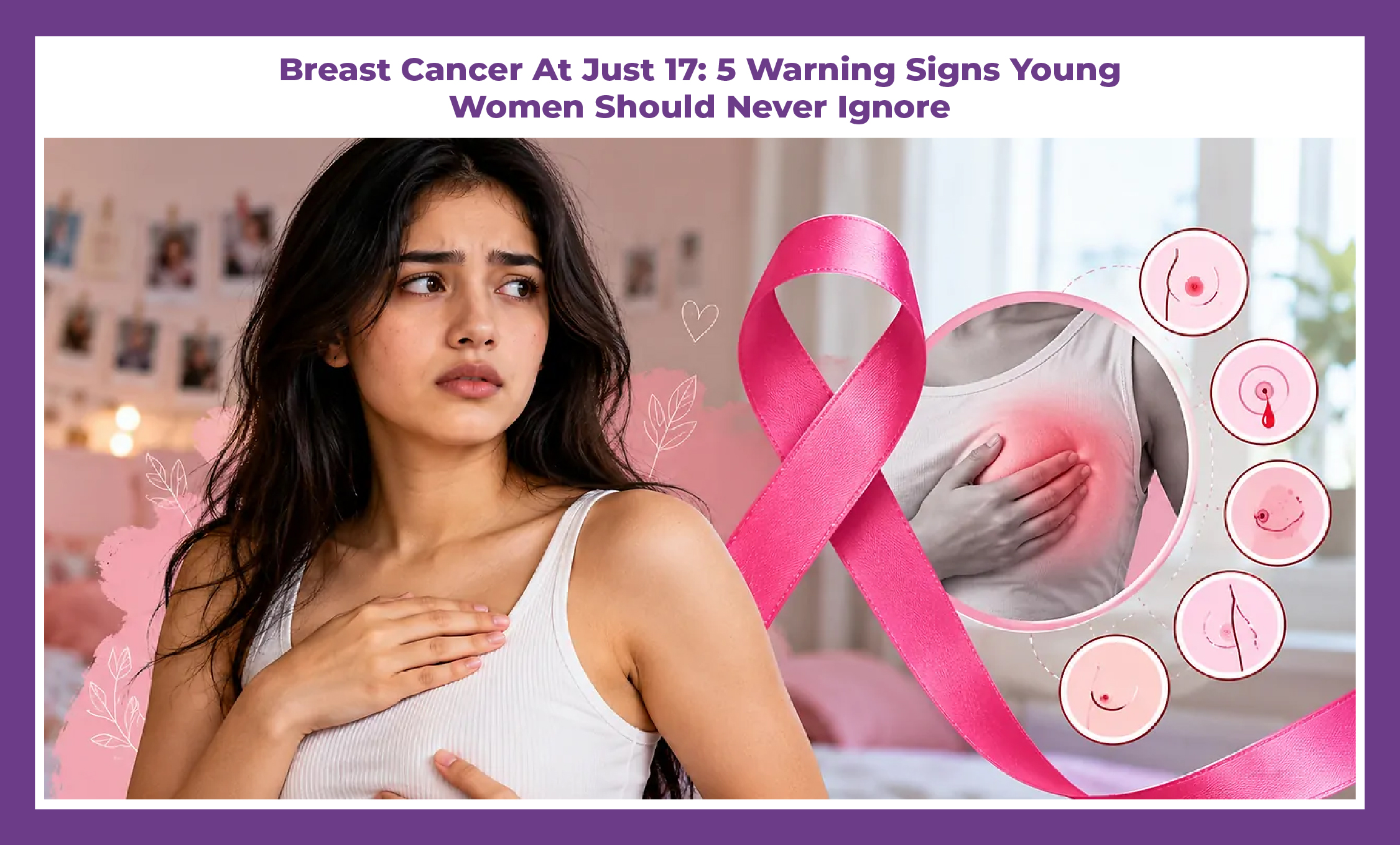
Breast cancer can affect women as young as 17. Doctors explain the warning signs, genetic risks and breast changes young women should never dismiss as hormonal fluctuations. Breast cancer is often associated with women in their 50s and 60s. So, if you are in your 20s, finding a lump in your breast might be the last thing you associate with cancer. Hormonal changes, menstrual cycles or a benign cyst might seem like more obvious explanations. But what if age isn't the safety net you think it is?
Doctors are increasingly emphasising that breast cancer can affect younger women too, with some cases being diagnosed in their teens and 20s. In fact, the youngest breast cancer patient encountered by Dr. Kunjal Lila, Head of Department and Consultant in Surgical Pathology at Metropolis Healthcare Ltd., was just 19 years old. Dr. Mandeep Singh Malhotra, Director, Surgical Oncology at The CK Birla Hospital, Delhi, has treated a patient as young as 22, while Dr. Sakshi Goel, Senior Consultant Obstetrics & Gynecology at Madhukar Rainbow Children's Hospital, Delhi, recalls treating a 25-year-old patient. Dr. Deepak Jha, Chief, Surgical Oncology & Breast Surgery at Artemis Hospital, Gurgaon, points out that cases have even been reported at 17.
According to Dr. Malhotra, age alone should never determine whether a breast change deserves medical attention. While family history of breast or ovarian cancer, inherited genetic mutations such as BRCA1 and BRCA2, and previous radiation exposure can increase the risk, many young patients do not have any obvious risk factors.
What Are The Warning Signs You Shouldn't Blame On Hormones?
A breast lump that appears around your menstrual cycle might seem like a hormonal change, but what happens when it refuses to go away? A new or persistent breast lump, changes in nipple appearance, unusual nipple discharge, changes in breast shape, dimpling or other skin changes are symptoms that deserve medical attention, regardless of age. Dr. Lila cautions that younger women often tend to dismiss breast lumps, assuming they are harmless. While several breast lumps are benign, it is important to get persistent changes evaluated rather than attempting to self-diagnose. "Many lumps are not cancerous, but it is not advisable to skip checking any lump or change that appears and persists," she explains.
Another important consideration is breast density. Younger women often have denser breast tissue, which can make certain abnormalities more difficult to identify through some imaging techniques. This makes clinical assessment particularly important when symptoms persist, even if an initial investigation does not provide a clear answer. Dr. Singh emphasises that a woman's age should never become a reason to overlook unusual breast changes. Apart from lumps, nipple changes, unusual secretions and alterations in breast shape or skin texture also warrant attention. "Breast changes such as a new or persistent breast lump, changes in the nipple, unusual secretions from the breast, skin changes, as well as changes in the breast shape shouldn't be readily ignored in someone who is young or thought of as being hormonally changed," he says.
Does Family History Change Your Risk?
A diagnosis of breast cancer at a young age can also warrant a closer look at inherited genetic risk. According to Dr. Goel mutations in genes such as BRCA1 and BRCA2 are among the important hereditary factors associated with breast and ovarian cancer. Genetic counselling can help women understand their family history, assess whether genetic testing is advisable and interpret what the results could mean for them and their family members. However, he clears "genetic risk does not mean inevitability of cancer; rather, it is a sign that risk assessment and medical counselling would be of great help."
Dr. Jha also points towards lifestyle-related factors, including alcohol and tobacco consumption, sedentary habits, poor nutrition and sleep disturbances, as concerns when assessing breast cancer risk. His larger message is about the importance of awareness and timely evaluation, particularly as breast cancer is being diagnosed in younger patients too.
The takeaway is that you do not have to wait until you turn 40 or 50 to take a breast change seriously. Knowing your body, noticing what feels different and getting persistent symptoms medically evaluated could make all the difference. Your age is not a reason to dismiss a warning sign.
Subscribe Newsletter
Get all the information, latest updates, and articles delivered directly in your inbox